About
The people who scope the work do the work.
House of Giants is a small, independent software studio in Denver, founded in 2017, principal-led ever since. There's no account team and no handoff.
How this studio happened.
The turn
For years the work looked like websites, because that was the category the market recognized. The real work was never the pages. It was architecture decisions, product tradeoffs, and the thinking that happens before and during a build. The part that decides whether a thing should exist at all. The positioning changed because the work was already there. The language finally caught up.
The record
The proof is on the work page: an embedded partnership that has shipped five products since 2022, a booking platform where the deliverable is a door that actually unlocks, an AI soundtrack builder with over a billion combinations of one artist's real outtakes, and a marketing site built in a month as a system instead of a stack of pages.
The work →THE STUDIO
How we operate
Small by design, not by circumstance.
Four constraints, chosen on purpose. Everything else about the studio follows from them.
№ 1
Small by design.
Headcount changes rarely and deliberately, because the smallness is the pitch. The people you meet are the people making the decisions and doing the work.
№ 2
Principal-led.
Architecture, product tradeoffs, and technical judgment stay close to the code. Nothing gets decided in a deck and thrown over a wall… the person who made the decision is the person who lives with it in production.
№ 3
Transparency over theater.
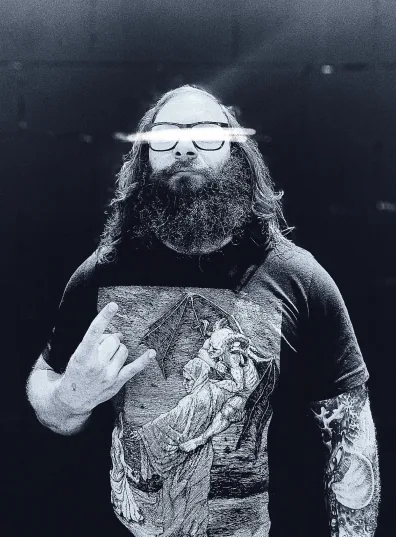
Clear pricing, direct accountability, and fewer layers between the product and the people building it. The pricing page has real numbers on it for the same reason this page has a real person on it.
How engagements are priced →№ 4
Denver roots, national work.
Based in Denver since 2017. The work is wherever serious product teams need it.
We're not hiring by default, the smallness is deliberate, but exceptional people are read with genuine interest at hello@houseofgiants.com.
Founder & Lead Product Engineer
Dominic Magnifico.
Dom is still hands-on in the work. He architects systems, pressure-tests roadmap decisions, and writes code. The title says engineer because that's the actual job
He started building for the web in 2010; local restaurant sites in Denver, Agencies where he ran hiring and wrote the standards the whole team built on, where the clients were Samsung, Uber, TechCrunch, Stanford and the Nobel Prize. Enterprise scale is where the architecture instincts come from; the agency years are where the opinions about process come from.
When an engagement needs more capacity, he brings in specialists from a network built through years of real collaboration. The point isn't to look bigger than the studio is. It's to keep the senior thinking close to the product and expand only when the build actually demands it.
The network isn't a bench, and it doesn't work like one. The people in it are collaborators Dom has shipped real products with. Design partners, UX, extra engineering, all contracted for a defined role on a specific engagement, and the proposal names who's actually on yours. Their work lands in the same repository, gets logged in the same decision record, and goes through Dom before it ships. Nobody is sitting on standby: capacity gets scoped and booked per engagement, so if a build needs more hands, that's settled in the proposal before you sign rather than promised here. The accountability never moves.
The fair follow-up is what a five-month build does if Dom is out for two weeks. Honestly: it loses about two weeks. There is no bench, and we won't invent one for this paragraph. What there is instead is a record you can audit: decisions get written down as they're made, builds are phased with a decision point between each phase, and the code lives in your repository. The state of the project never rides on what's in one person's head that week. And if continuity or coverage terms are what the decision hangs on, raise them on the call, we'll answer them in the proposal, per engagement, where that answer can be honest.
In practice
- You can have a real architecture conversation on the first call.
- The person making tradeoff calls still understands the codebase.
- The work grows with the product instead of resetting every phase.
Design partners
House of Giants is an engineering studio, so for design-forward work we partner with people who do design for a living. Yeti Island designed Hyperlocology; we built the custom WordPress block theme underneath it in one month.
That's the whole studio. The person you just read about is the person who replies.
Free · Thirty minutes · Reply within one business day